
May 2026
Domaine du Gringet
La Bergerie 2022
Gringet
Savoie, France
Dominique Belluard was a Savoie winemaker who slowly rose to fame, and who loved and championed Gringet. Gringet is a tough, finicky grape that struggles with both powdery and downy mildew. He was known for his magical touch on a difficult grape to coax out flavors, terroir, and personality from every bottle. Highly regarded for his talent and passion for wine, he is still remembered for the impact he had on the region of Savoie. Unfortunately, he passed away in 2021. Several of his friends, including Franck Balthazar and Jean-Francois Ganevat (Ganevat is one of our all-time favorite winemakers) helped ease the transition to the domain’s new winemaker, Vincent Ruiz.
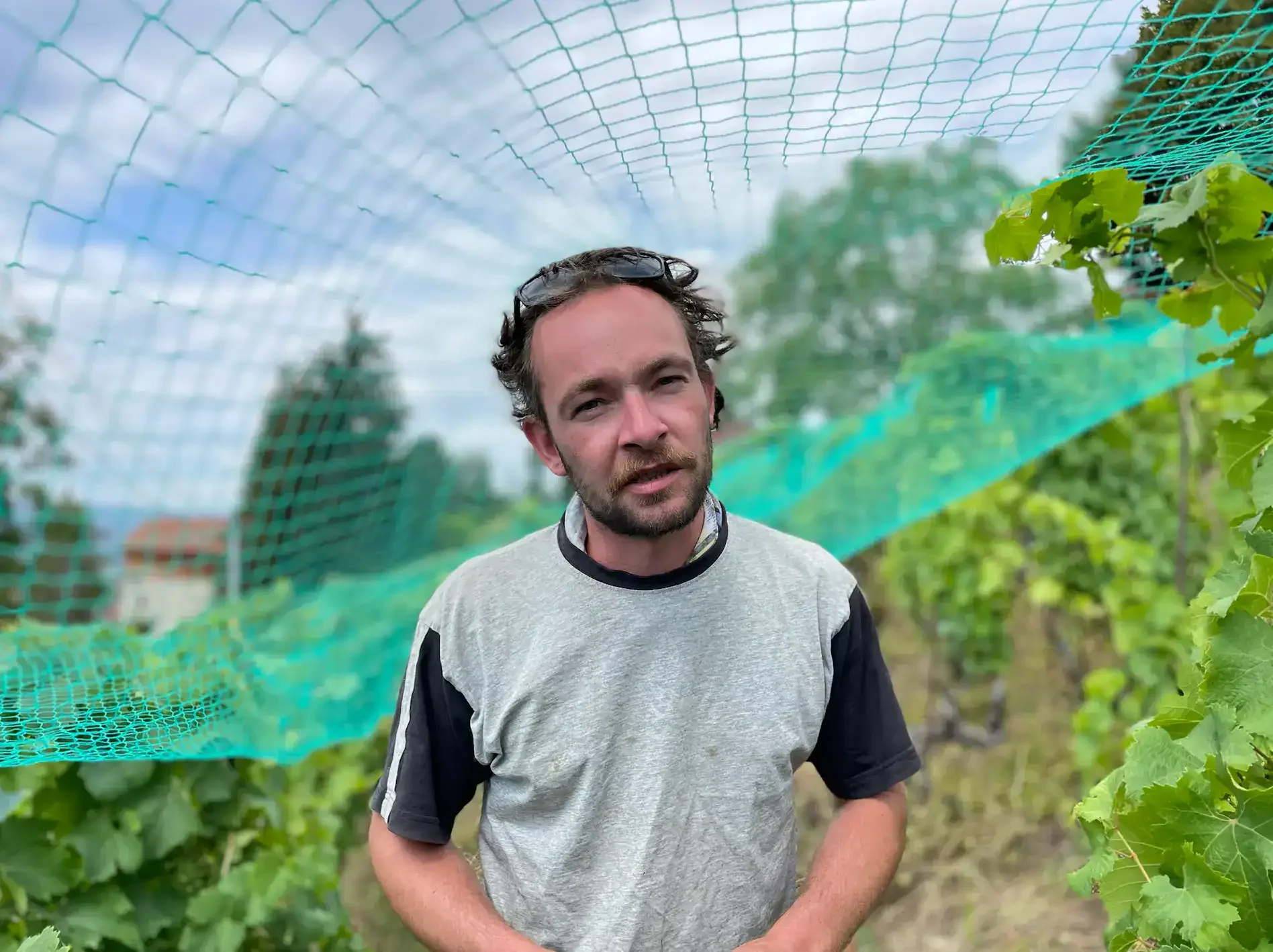
In 2022, Vincent transitioned all winemaking to the Arve Valley in Savoie. This wine is from 2022, his inaugural vintage leading the domain. He has done a phenomenal job of continuing Dominique’s legacy while implementing new techniques and making the domain his own. He has transitioned to fully hand harvesting, with no tractors or machinery. Maintaining the spirit of Gringet is no easy task but Vincent excels at it. Lovely, firm acidity is the driving force of this wine, supported by bright citrus, and a light salty minerality. This makes the wine complex and a true representation of philosophies and place.
We hope as you drink this wine, you raise a glass to a true legend in Dominique Belluard. He was a deserving human for his efforts in growing a region that, unfortunately, still isn’t recognized enough for its quality and uniqueness. Gone too soon, but lives on forever in every glass of Gringet. Cheers, and here’s to the future.
Pairing: Vichyssoise with Aioli
Fun fact: Dominique Belluard was one of the first producers in France to use the concrete egg for fermentation and aging.
Clos de la roilette
Fleurie 2024
Gamay
Beaujolais, France
Clos de la Roilette was neglected, then resurrected. The vines of this domain have been farmed since at least the 1920s when the Fleurie appellation was created in Beaujolais. These vines were under the Moulin-à-Vent appellation in 1927, when a map was created to demarcate the new appellation of Fleurie. The map and appellation were finalized in 1936. The winemaker of the time was furious over this decision as he lost the designation of a famous Cru of Beaujolais and started to slowly give up on these vines. The original owner’s heirs continued this trend, and by the 1960s, they had lost all interest in this land and abandoned the majority of it to mother nature. In came Fernand Coudert, who saw beauty where others didn’t.
In 1967, Coudert purchased the land and replanted the vines. In 1984, his son, Alain, joined him, and is still the winemaker today. These wines showcase darker fruits that are typically associated with gamay. It almost presents as a Pinot Noir. Unique within Beaujolais, it can age beautifully. Various cuvées have more ageability than others, and the one we have selected for you sits right in the middle. This Fleurie is drinking beautifully right now with dark fruits, tannins that are just firm enough to balance out the very present acidity and spice in this wine. Go ahead and sit on this one or drink it young; either way, it will be stunning.
We are thankful for those who recognize greatness in places that others slough off. If it weren’t for those people, we wouldn’t have the modern-day Clos de la Roilette, and that is a darker world than we want to live in.
Pairing: Roast Chicken with Plums
Fun fact: The horse on the label has been a staple since 1910, an homage to the previous owner’s favorite and most prized racehorse.
Castiglion del Bosco
Gauggiole 2021
Sangiovese
Tuscany, Italy
Names are important, and the quote on the estate’s website puts it best: “The name itself reveals its character: the bosco, (wood), surrounding the Castiglion (walled castle) is the domain of deer, boars and pheasants. And of Sangiovese.”
This quote succinctly illustrates the domain’s philosophy on the convergence of human intervention and nature, which says a lot about the style of this wine.
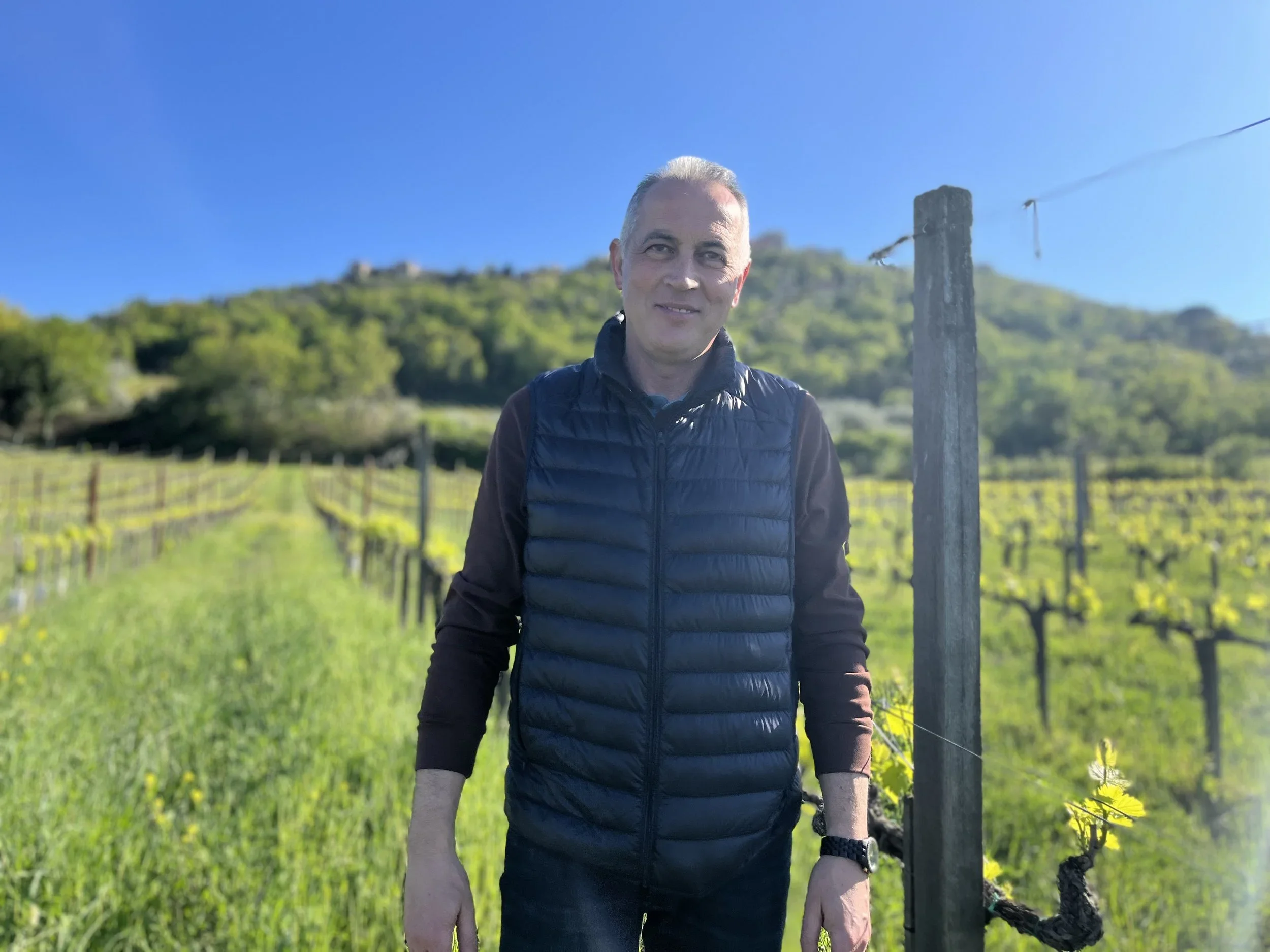
The grapes that go into this wine are cherry-picked from a couple of different vineyards within the northeastern part of the estate. The name of this wine is also tied to the farmstead where it originates. This estate’s wines are made up of 100% Sangiovese, and this allows every individual wine to express its terroir throughout the vines this producer cultivates. The family that runs this estate was a part of the consortium that elevated the status of Brunello di Montalcino from DOC to DOCG (the higher classification). Funny enough, the Consorzio del vino Brunello di Montalcino website uses the same rhetorical comparison of names that came to mind for us.
This wine is elegant with a powerful backbone. Flavors of resinous herbs dot the palate with the support of bright cherry, minerality, and that quintessential Italian rusticity. Fine tannins are the dotting of the i’s and crossing of the t’s, finalizing what we think is a wonderful experience. As you can tell, it’s a little too easy to wax poetic, and be a little bit obsessed with this wine. This wine pairs great with friends and a fun board game. We hope you enjoy and find the same symbolic beauty in this glass as we did. Cheers!
Pairing: Spicy, Creamy, Weeknight Bolognese
Fun fact: The estate’s previous winemaker, Cecilia Leoneschi, originally wanted to be a veterinarian.